
Tips & Tricks
Do Sunrise Alarm Clocks Work? What Dawn Simulation Can and Can't Do
· 11 min read
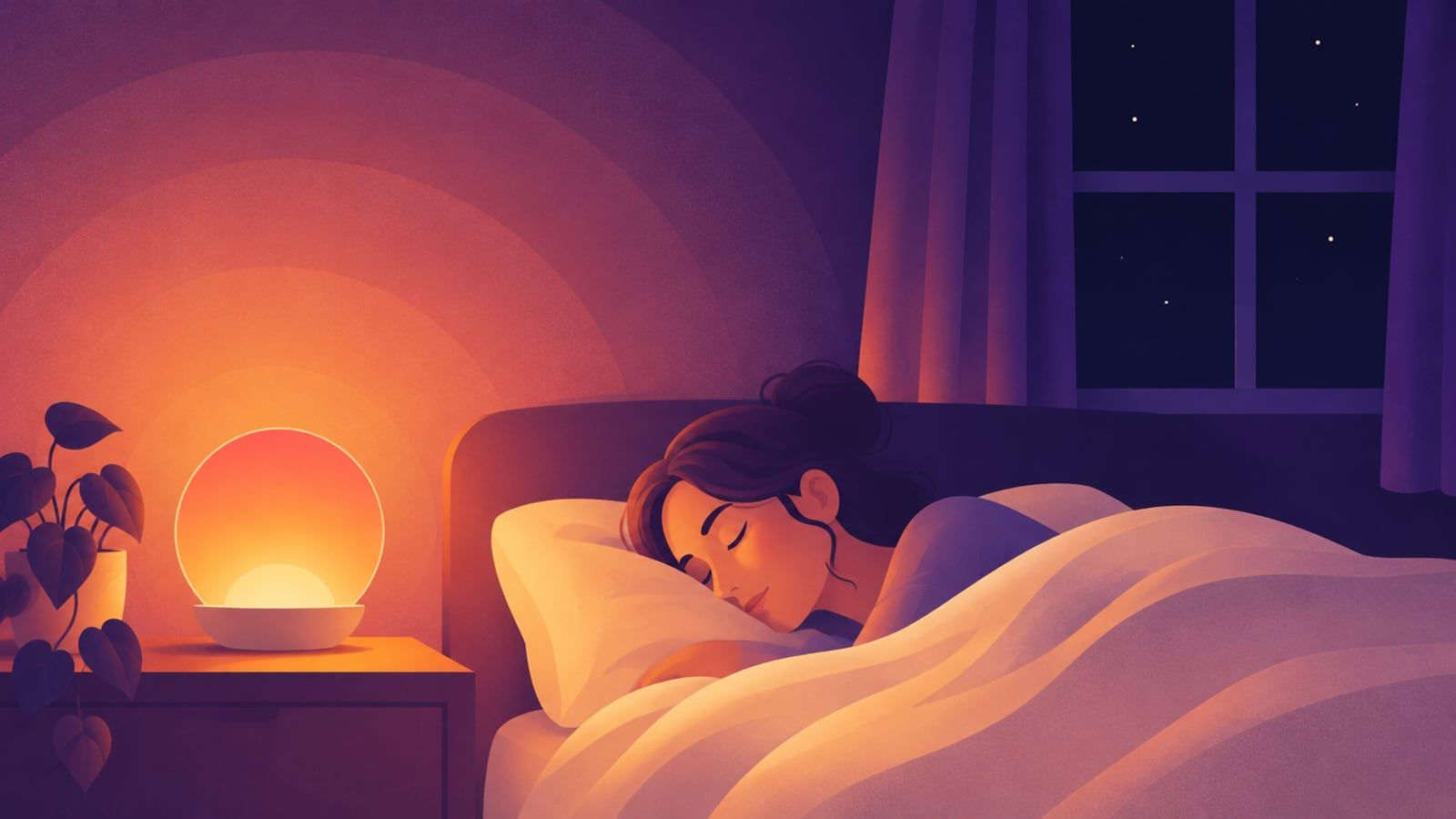
It is 6:15 on a weekday in late November, and your alarm goes off in a room that is still fully dark. You find the phone by feel, the screen hits you like a flashlight in a cave, and for the next twenty minutes your brain runs at roughly the speed of the hot water in an old building.
And it is getting darker. The clocks went back on November 1, which bought a brief reprieve: in New York, sunrise jumped an hour earlier on the clock, to 6:26. It has slid later every day since, to 6:40 on November 13 and 6:59 by the end of the month (timeanddate), and it keeps going until about 7:20 in the first week of January (timeanddate). With a 6:30 alarm, you will be getting up before the sun for months.
Enter the sunrise alarm clock: a lamp that brightens over the last stretch of your sleep, so the alarm meets a brain that has already started to surface. The evidence is real, and smaller than the packaging suggests.
The short answer: sunrise alarm clocks work, modestly, on how you feel after waking. In small controlled studies, a simulated dawn at the end of the night, typically 30 minutes long and peaking around 250 lux, left people more alert, in a better mood and slightly quicker on simple tasks, and reduced complaints of morning grogginess. Light alone is not a reliable way to wake up, so keep a sound alarm behind it, and treat any effect on winter depression as promising but thinly tested.
How a sunrise alarm clock works
A dawn simulator is a bedside lamp on a slow timer that fades up from darkness before your alarm: a sunrise in fast-forward.
The light has to get through your eyelids first, and they are better curtains than you would think. One classic measurement estimated that closed eyelids pass about 0.3 percent of blue and green light and 5.6 percent of red (Ando and Kripke, Biological Psychiatry, 1996). That is why the lamp needs to be close and fairly bright.
What gets through reaches a system built to notice it: regular exposure to light and darkness is the primary synchronizer of the human circadian clock (Duffy and Czeisler, Sleep Medicine Clinics, 2009). In one study, twelve healthy people used a dawn simulator rising to about 250 lux over 30 minutes, with an audible alarm at the end. On dawn mornings, their cortisol output in the first 45 minutes after waking was significantly higher, and they reported feeling more awake (Thorn et al., Psychoneuroendocrinology, 2004).
Do sunrise alarm clocks work? What the studies found
- Alertness and performance. Eight people who reported difficulty waking were tested with and without a dawn starting 30 minutes before waking. With the dawn, they felt more alert throughout testing, completed slightly more additions, and their reaction times averaged 0.81 seconds against 0.86 (Thompson et al., European Journal of Applied Physiology, 2014).
- Grogginess at home. A Dutch home study gave people who struggle with early mornings two weeks each of no dawn, a 50 lux dawn and a 250 lux dawn, then in a second study a brightness they chose. In both, the dawn significantly reduced complaints of sleep inertia (Giménez et al., Chronobiology International, 2010).
- After short nights. Seventeen people slept six hours a night for two nights in a lab. A dawn rising to 250 lux, starting 30 minutes before the wake time, improved mood and well-being after both nights, and cognitive performance on the first day, though not the second (Gabel et al., Chronobiology International, 2013).
The grogginess these studies measured has a name, sleep inertia, and it is where these lamps have their best evidence. Two details are worth knowing.
First, the benefit doesn’t seem to come from resetting your body clock: the home study found no significant shift in melatonin timing after two weeks, and the lab dawn had minimal effect on circadian phase. The lamp seems to change how you surface, not when your body thinks morning is.
Second, it doesn’t work for everyone. When Stanford researchers tried a 30-minute dawn on 23 adults with an average age of 67, it reduced their sleep before the morning wake-up by a third but made no measurable difference to alertness, balance or the cortisol response after getting up (Gabel, Miglis and Zeitzer, Sleep, 2020).
Do sunrise alarms help with winter depression?
Here the evidence is older and smaller, but not nothing. In a 2001 trial, 95 people with seasonal affective disorder who were not taking medication were assigned to a 90-minute dawn peaking at 250 lux, 30 minutes a day at a 10,000 lux light box, or a dim red placebo dawn. Over six weeks the dawn beat both on remission and response, though, oddly, the light box did no better than placebo (Avery et al., Biological Psychiatry, 2001). A 2006 trial of 99 adults found the dawn an active antidepressant but not a better one than the light box: symptoms improved by 49.5 percent with the dawn and 57.1 percent with the light box over three weeks (Terman and Terman, American Journal of Psychiatry, 2006). A 2005 meta-analysis put dawn simulation’s effect size at 0.73 across five trials, against 0.84 for bright light, while noting that only 13 percent of the studies it screened met its inclusion criteria (Golden et al., American Journal of Psychiatry, 2005). The NHS does not usually offer light therapy, because there isn’t enough evidence to say whether it works, though many people find it helps (NHS).
So a dawn simulator is a reasonable thing to try for the winter slump, not a substitute for care. If you have bipolar disorder, talk to your clinician before any light therapy: Mayo Clinic warns that increasing light exposure too fast may bring on manic symptoms, and advises seeing an eye specialist first if you have glaucoma, cataracts or diabetic eye damage (Mayo Clinic). Some medicines make you more sensitive to light, so ask about those too (NHS). If low mood has lasted two weeks or more, most of the day and nearly every day, see a clinician, and if you are thinking about harming yourself, call or text 988 in the US (NIMH).
What a sunrise alarm clock can’t do
- Wake a heavy sleeper on its own. Your eyelids filter out most of the light, and in two of the studies cited here, an ordinary alarm sounded at the end of the dawn anyway (Thorn et al.; Danilenko and Ivanova, Journal of Affective Disorders, 2015). If you already sleep through alarms you don’t remember dismissing, a glow won’t change that.
- Keep its light to itself. A lamp bright enough to reach your retina through closed eyelids reaches the person next to you too. If a dawn can trim sleep from the end of your night, assume it can trim theirs.
- Replace the sun. The dawns in these studies mostly peaked around 250 lux, while a light box for seasonal depression is rated at 10,000 lux (Mayo Clinic). Even ordinary daylight outclasses indoor light: during a summer camping week with only natural light, people’s first two hours awake averaged about 3,000 lux, against about 900 in their usual electrically lit week (Wright et al., Current Biology, 2013).
- Make up for short sleep. In the six-hour study, the performance boost didn’t survive the second short night. If your wake time leaves you short, the fix is an earlier bedtime; the sleep calculator works backward from your alarm.
How to use a sunrise alarm clock
1. Start the ramp about 30 minutes before the alarm
Most of the waking studies used a 30-minute ramp, so start there and adjust: shorter if you wake early and resent it, longer if the light seems to do nothing.
2. Put it close and aim it at your face
Your eyelids are the reason. Put the lamp on your side of the bed, about level with the pillow and angled toward where your head actually ends up.
3. Start from a dark room
People in the Stanford study slept in complete darkness until the dawn began. Blackout curtains and a face-down phone help, and a sleep mask lets a partner who gets up later opt out.
4. Keep a real sound behind it
Set an alarm you would hear without the lamp, at the volume you will actually use, and put the phone out of arm’s reach. For anything you can’t miss, add a second alarm on a separate device.
5. Once you’re up, get more light, not less
Turn the room lights on, then get to daylight as soon as there is any. In a lab study, people woken from deep sleep at night and given an hour of bright, blue-enriched light had fewer attention lapses and felt more alert and cheerful than with dim red light (Hilditch et al., Journal of Sleep Research, 2022). Light early in your biological day also nudges your body clock earlier (Duffy and Czeisler), which is the long game in becoming a morning person.
Where WakeSharp fits: the lamp starts the wake-up, a mission finishes it
A sunrise alarm clock handles the first half of waking. The second half, actually getting up, is what WakeSharp is built for: when the alarm rings, the morning asks you to complete a mission, and one of them is about light.
First Light asks you to walk to a window and hold your phone in the light. It sits with the movement missions, next to Walk It Off, which counts real steps (walking and exercise alarm missions). It builds the advice above into the alarm itself: get up, and get to the brightest light in the house. Morning light is the main cue the body clock gets that the day has started.
The honest limit: First Light needs light to find. With a 6:15 alarm and sunrise still half an hour or more away, your window has nothing to offer yet, so for the darkest weeks choose a mission that doesn’t depend on the sky, such as Walk It Off (with a light on), and bring First Light back when sunrise comes before your alarm again. Like other camera and movement missions, it needs the right permissions and supported hardware, so try it once in daylight first. However you quiet the alarm, the morning only counts once the mission is done. Your phone’s own controls always work: nothing stops you switching the phone off. WakeSharp doesn’t measure your sleep, and no lamp, app or alarm can guarantee you wake up.
FAQ
Do sunrise alarm clocks actually work?
For how you feel after waking, yes, modestly. Small controlled studies found that a dawn over the last stretch of sleep, often 30 minutes long, improved alertness, mood and simple task performance, and reduced complaints of grogginess. One study of older adults found no benefit to alertness, and none of the studies suggest the light can replace a sound alarm.
How long before waking should a sunrise alarm start?
About 30 minutes, the ramp most of the waking studies used; a trial for winter depression used a slower 90-minute dawn. If you wake well before the alarm, shorten it. If nothing seems to happen, lengthen it or move the lamp closer to your pillow.
Are sunrise alarm clocks good for heavy sleepers?
As a helper, not as the main alarm. Closed eyelids block most light, so pair the lamp with a loud alarm you have tested and keep the phone out of arm’s reach. If you regularly sleep through alarms, talk to a clinician, especially if you also snore loudly, gasp in your sleep or feel sleepy all day: those are signs of sleep apnea (NHLBI).
Is a sunrise alarm clock the same as a SAD lamp?
No. A dawn simulator works during the last part of your sleep, and in the studies it peaked around 250 lux. A SAD light box is used after waking, with your eyes open, and is rated at 10,000 lux. In winter depression trials, the dawn did about as well as a light box, and in one trial better, though people with more severe depression tended to do better with the box (Danilenko and Ivanova). If you are treating low mood, involve a clinician.
What to expect tomorrow morning
A sunrise alarm clock won’t haul you out of bed, and the research never claimed it would. What it can do is make the alarm land on a slightly more awake version of you. Set the ramp, aim the lamp, keep a sound you can’t sleep through, give it two weeks, and once you’re up, go and find the brightest light you can. In November that is probably a lamp. Come spring, it will be a window again.
- morning-light
- dark-mornings
- circadian-rhythm